In thermal power plants, Hydrogen (H2) is widely used as a coolant for large-scale generators due to its high thermal conductivity and low viscosity. However, while H2 enhances cooling efficiency, it also poses significant safety risks if not managed correctly.
At HMHitech, we provide advanced monitoring solutions focusing on high-precision sensors and display modules to ensure your plant operates within the safety envelope.
1. The Danger of H2 Leakage: An Invisible Threat
Hydrogen is a highly flammable gas. When it leaks and mixes with air, it creates an explosive atmosphere at concentrations ranging from 4.0% to 75.0%.
The risks associated with H2 leakage include:
- Fire and Explosion: Even a small spark can ignite a hydrogen-air mixture, leading to catastrophic damage to the generator and surrounding infrastructure.
- Cooling Inefficiency: A drop in H2 purity due to air ingress reduces the cooling capacity, leading to generator overheating and forced derating.
- Economic Loss: Unplanned outages for repair and the high cost of lost hydrogen gas.
2. Advanced Monitoring with Long Rich Technology
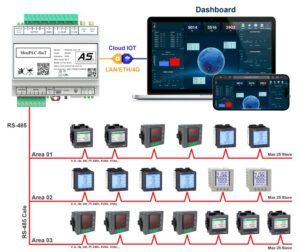
To mitigate these risks, HMHitech utilizes specialized components, such as the Long Rich (LR) display and control modules, to build a robust detection network.
High-Precision H2 Sensors
Our systems employ electrochemical or thermal conductivity sensors designed to detect even trace amounts of hydrogen. These sensors provide:
- Extreme Sensitivity: Detection of H2 leaks at the parts-per-million (ppm) level.
- Stability: Reliable performance in the high-electromagnetic environments found near generators.
Intelligent Display Modules (Long Rich Series)
The Long Rich LR056 and similar modules serve as the interface between the sensors and the operator.
- Real-Time Visualization: High-definition displays show current gas concentrations and system status at a glance.
- Multi-Channel Support: Ability to monitor multiple zones (such as generator bearings, seal oil systems, and hydrogen supply lines) simultaneously.
- Analog and Digital Output: Seamless integration with the plant’s main Control Room via 4-20mA signals or Modbus communication.
3. Establishing an Early Warning and Response System
A successful safety strategy relies on an automated, multi-tiered warning system:
- Level 1 Warning (Pre-Alarm): Triggered when H2 concentration reaches a low threshold (e.g., 1.0% Vol). This alerts operators to investigate potential slow leaks or seal issues.
- Level 2 Alarm (Critical): Triggered at a higher threshold (e.g., 2.0% Vol). The system activates local sirens, strobe lights, and sends a high-priority signal to the DCS (Distributed Control System).
- Automatic Mitigation: At critical levels, the system can be configured to automatically trigger ventilation fans or isolate H2 supply valves to prevent the concentration from reaching the lower explosive limit (LEL).
4. Why Partner with HMHitech?
With our expertise in power plant equipment—from excitation systems to emission monitoring—HMHitech offers a holistic approach to safety. We don’t just supply parts; we provide:
- Site Surveys: Assessing the most critical points for sensor placement around your generator.
- Configuration and Calibration: Ensuring display modules like the Long Rich series are perfectly calibrated to your plant’s specific safety protocols.
- Maintenance and Spare Parts: Rapid supply of replacement sensors and display modules to ensure zero downtime for your safety systems.
Conclusion
Safety in a hydrogen-cooled environment is non-negotiable. By implementing a modern detection system with Long Rich technology, you empower your operations team to detect, react, and resolve issues before they escalate into disasters.